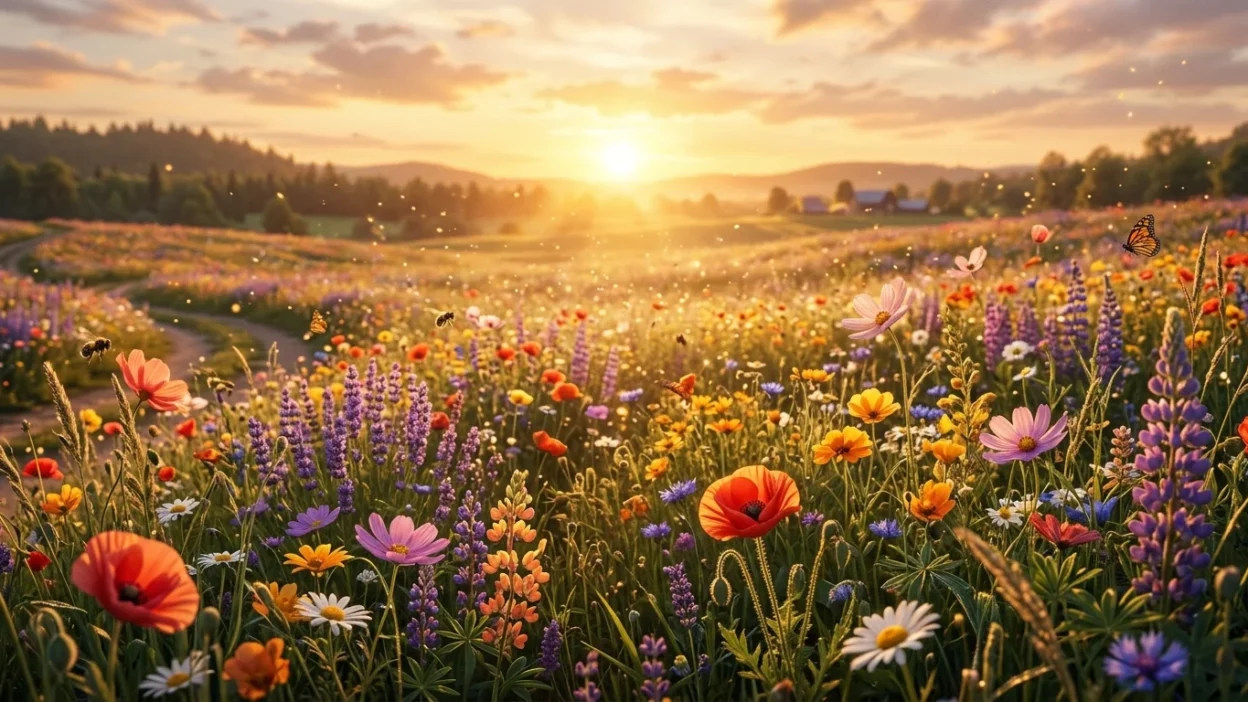
Flower symbolism has inspired people across generations because it reflects beauty, growth, and emotional expression so naturally.
Whenever people see flowers, they often think about love, renewal, and meaningful moments, so flowers strongly connect with life’s changing seasons.
As a result, flower symbolism represents joy, transformation, and inner beauty.
Flower Symbolism Meaning (Clear Definition)
At its core, flower symbolism represents beauty, growth, renewal, and emotional expression. Because flowers bloom and transform over time, they symbolize life, change, and natural cycles.
At the same time, flower symbolism reflects love, hope, harmony, and spiritual awakening.
What Does Flower Symbolism Represent?
Flower symbolism represents several meaningful ideas, and each meaning deepens its significance.
First, it represents beauty, since flowers naturally attract attention and admiration. Next, it reflects growth, so it connects with personal development and transformation. In addition, flower symbolism represents renewal, because flowers bloom repeatedly through changing seasons.
Moreover, it symbolizes love and emotional connection, creating moments of joy and appreciation. Therefore, flower symbolism encourages gratitude, positivity, and self-expression.
Key symbolic meanings include:
- Beauty and grace
- Growth and transformation
- Renewal and fresh beginnings
- Love and emotional connection
- Hope and spiritual awakening
Spiritual Meaning of Flower Symbolism
Spiritually, flower symbolism strongly connects with awakening and inner growth. Because flowers open gradually, they symbolize spiritual unfolding and personal discovery.
Moreover, flower symbolism encourages you to embrace your natural path and appreciate each stage of growth. As you grow spiritually, you begin to recognize beauty in both change and progress.
Therefore, many spiritual interpretations view flowers as symbols of peace, healing, and renewal.
Biblical / Religious Meaning of Flower Symbolism
In religious contexts, flower symbolism holds meaningful interpretations. In Christianity and many traditions, flowers often represent beauty, creation, and spiritual blessings.
At the same time, flower symbolism reflects renewal and hope. Because flowers bloom for a season, they symbolize appreciation for life and trust in divine timing.
Therefore, flower symbolism highlights gratitude, faith, and spiritual beauty.
Flower Symbolism in History and Culture
Throughout history, flower symbolism appears in many cultures with rich meanings. People often connect flowers with celebration, emotions, and important life events.
In many traditions, flowers symbolize purity, prosperity, and human connection. Because different flowers bloom uniquely, they also reflect individuality and expression.
Overall, flower symbolism consistently reflects beauty, emotion, and transformation across cultures.
Flower Symbolism in Literature and Art
In literature and art, flower symbolism often expresses emotion, love, and personal growth. Writers use flowers to represent changing seasons of life and emotional depth.
At the same time, artists portray flowers as symbols of beauty and renewal. Because flowers bloom and fade, they also reflect life’s temporary yet meaningful moments.
Therefore, flower symbolism often highlights growth and emotional awareness.
Dream Meaning of Flower Symbolism
When you see flowers in a dream, it often signals growth and emotional fulfillment. For example, blooming flowers may suggest happiness and progress. Meanwhile, wilted flowers can indicate disappointment or emotional exhaustion.
If you receive flowers, you may experience appreciation or connection. On the other hand, planting flowers may reflect personal development and future success.
Therefore, flower dreams often encourage hope, healing, and self-expression.
Modern Meaning of Flower Symbolism
Today, flower symbolism continues to represent beauty and emotional connection in modern life. People often connect flowers with love, celebration, and mindfulness.
At the same time, flower symbolism reflects self-growth and positivity. Because modern life moves quickly, flowers remind people to appreciate meaningful moments and natural beauty.
As a result, flower symbolism remains deeply meaningful and inspiring today.
FAQs
What does flower symbolism mean?
Flower symbolism represents beauty, growth, renewal, and emotional expression, while also reflecting love and hope.
Why do flowers symbolize renewal?
Flowers symbolize renewal because they bloom repeatedly and reflect life’s natural cycles of change and growth.
What does seeing flowers mean spiritually?
Seeing flowers spiritually often means growth, healing, inner beauty, and spiritual awakening.
Is flower symbolism positive or negative?
Flower symbolism is mostly positive because it represents beauty and renewal, although fading flowers can reflect endings.
What do flowers in a dream symbolize?
Flowers in a dream usually symbolize growth, emotions, happiness, or personal transformation depending on their appearance.
Conclusion
Flower symbolism continues to inspire because it represents beauty, growth, and renewal so naturally.
As you reflect on its meaning , you begin to understand how every stage of life carries value and possibility.
Ultimately, flower symbolism encourages you to embrace change, appreciate the present, and continue blooming with confidence, hope, and inner strength.

Rowan Blythecroft crafts atmospheric fiction filled with mystery and folklore.
Her stories often blur the line between reality and imagination.
She spends most of her days wandering forests and writing by candlelight.