Have you ever typed more then when you meant more than? You’re not alone. Since then and than sound similar, they’re among the most commonly confused words in English. However, they have completely different meanings, and using the wrong one can change the meaning of your sentence.
In this guide, you’ll learn the difference between more then vs more than, their meanings, examples, common mistakes, and simple tips to remember the correct phrase.
Quick Answer
Here’s the simple answer:
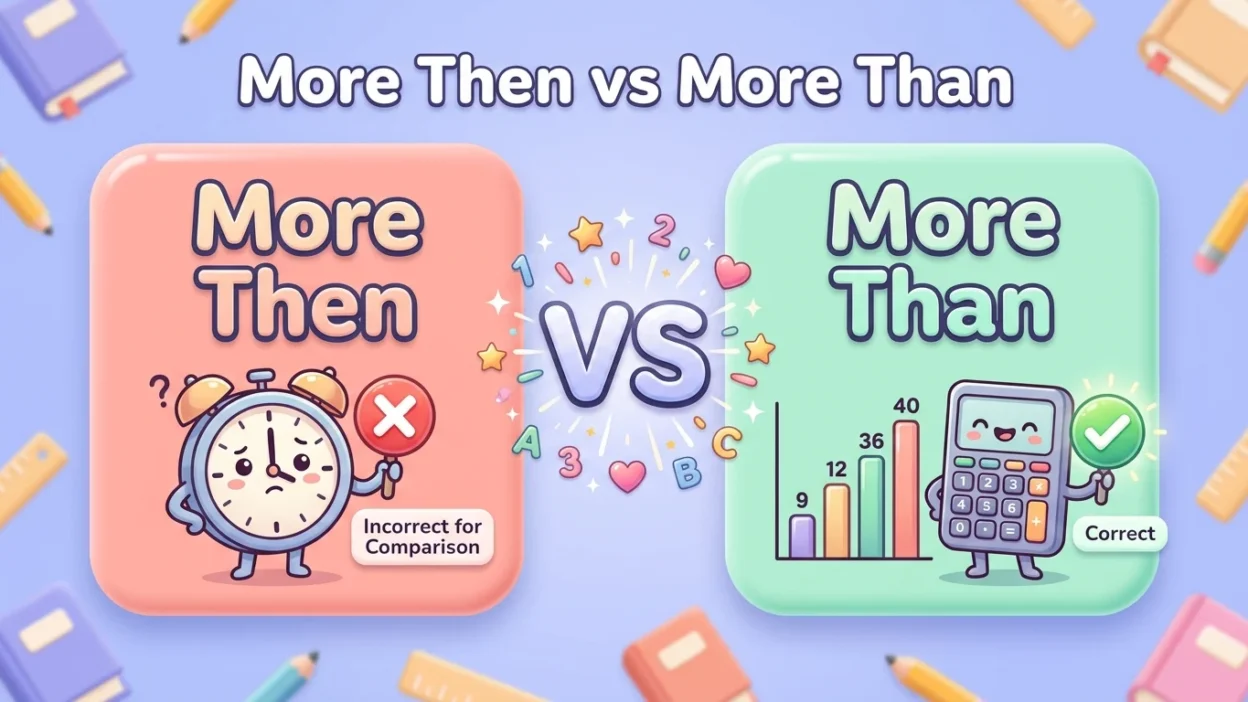
- More than ✅ is the correct phrase when comparing amounts, numbers, or quantities.
- More then ❌ is incorrect in standard English unless then is intentionally referring to time in a different sentence structure.
For comparisons, always use more than.
What Does More Then vs More Than Mean?
Although the phrases look almost identical, only one is correct for making comparisons.
What Does More Than Mean?
More than is a comparison phrase used to show a greater amount, number, degree, or quantity.
Examples:
- She has more than 100 books.
- I waited more than an hour.
- This laptop costs more than mine.
- He is more than happy to help.
This is the correct phrase in almost every comparison.
What Does More Then Mean?
More then is usually a grammatical mistake because then refers to time, sequence, or what happens next, not comparison.
Examples of then used correctly:
- We ate dinner, then watched a movie.
- Finish your homework, then go outside.
- Back then, life was simpler.
Notice that then is not being used to compare two things.
More Then vs More Than Comparison Table
| Feature | More Then | More Than |
|---|---|---|
| Correct for Comparisons | ❌ No | ✅ Yes |
| Refers to Time | Yes (with then) | No |
| Refers to Quantity or Amount | No | Yes |
| Used in Formal Writing | No (for comparisons) | Yes |
| Everyday Usage | Usually a mistake | Very Common |
Why Is “More Than” Correct?
The word than is used to compare two things.
Examples:
- More than 50 people attended.
- Better than expected.
- Larger than before.
The word then, however, relates to time or sequence.
Examples:
- We finished lunch, then left.
- Then I called my friend.
That’s why more then is incorrect when making comparisons.
Examples of More Than in Sentences
Here are some correct examples:
- She owns more than twenty plants.
- The project took more than six months.
- I spent more than I planned.
- This book is more than interesting.
- More than 1,000 people attended the event.
- He earns more than his brother.
- We received more than enough support.
Common Mistakes People Make
Many writers confuse then and than.
Common mistakes include:
- Writing more then instead of more than.
- Using then for comparisons.
- Mixing up time-related and comparison words.
- Missing the error while proofreading.
Simple Memory Trick
Here’s an easy trick:
- Than = Comparison
- Then = Time
Think:
More THAN = Comparing numbers or amounts.
THEN = What happens next.
When Should You Use More Than?
Use more than whenever you’re talking about:
- Numbers
- Amounts
- Quantities
- Comparisons
- Prices
- Distances
- Ages
- Sizes
When Should You Use More Then?
Generally, you shouldn’t.
If you’re comparing two things, more then is incorrect.
The word then should only be used when discussing time or sequence.
American vs British English
There is no difference between American English and British English.
Both use:
- ✅ More than for comparisons.
- ❌ More then when comparing amounts.
The grammar rule is exactly the same.
Related Words and LSI Keywords
Related terms include:
- than vs then
- comparison words
- grammar mistakes
- English grammar
- commonly confused words
- comparative phrases
- writing correctly
- English vocabulary
- grammar guide
- language learning
- amount comparison
- quantity comparison
- proofreading
- spelling differences
- English usage
- grammar tips
- word comparison
- common writing errors
- correct grammar
- comparison expressions
Tips for Remembering the Difference
Remember these simple tips:
- Use than when comparing.
- Use then when talking about time.
- Ask yourself: Am I comparing something?
- If yes, choose more than.
- Proofread carefully because spell check may not catch this mistake.
Frequently Asked Questions
What is the difference between more then and more than?
More than is used for comparisons, while then refers to time or sequence. Therefore, more than is the correct phrase in standard English.
Is more then ever correct?
Not when making comparisons. Then should only refer to time or the next event.
Why do people confuse than and then?
They sound similar, making them one of the most common grammar mistakes in English.
Is more than correct in American and British English?
Yes. Both American and British English use more than for comparisons.
Can I use more then in formal writing?
No. If you’re comparing amounts, always use more than.
How can I remember the difference?
Remember:
Than = Comparison
Then = Time
Summary
The difference between more then vs more than is easy to understand once you know the role of each word. More than is the correct phrase for comparing numbers, amounts, prices, sizes, or quantities. More then is almost always a grammatical mistake because then refers to time or sequence rather than comparison.
Whenever you’re comparing two things, always choose more than. Save then for talking about what happens next or referring to a point in time. This simple rule will help you avoid one of the most common mistakes in English writing.

Rowan Blythecroft crafts atmospheric fiction filled with mystery and folklore.
Her stories often blur the line between reality and imagination.
She spends most of her days wandering forests and writing by candlelight.