
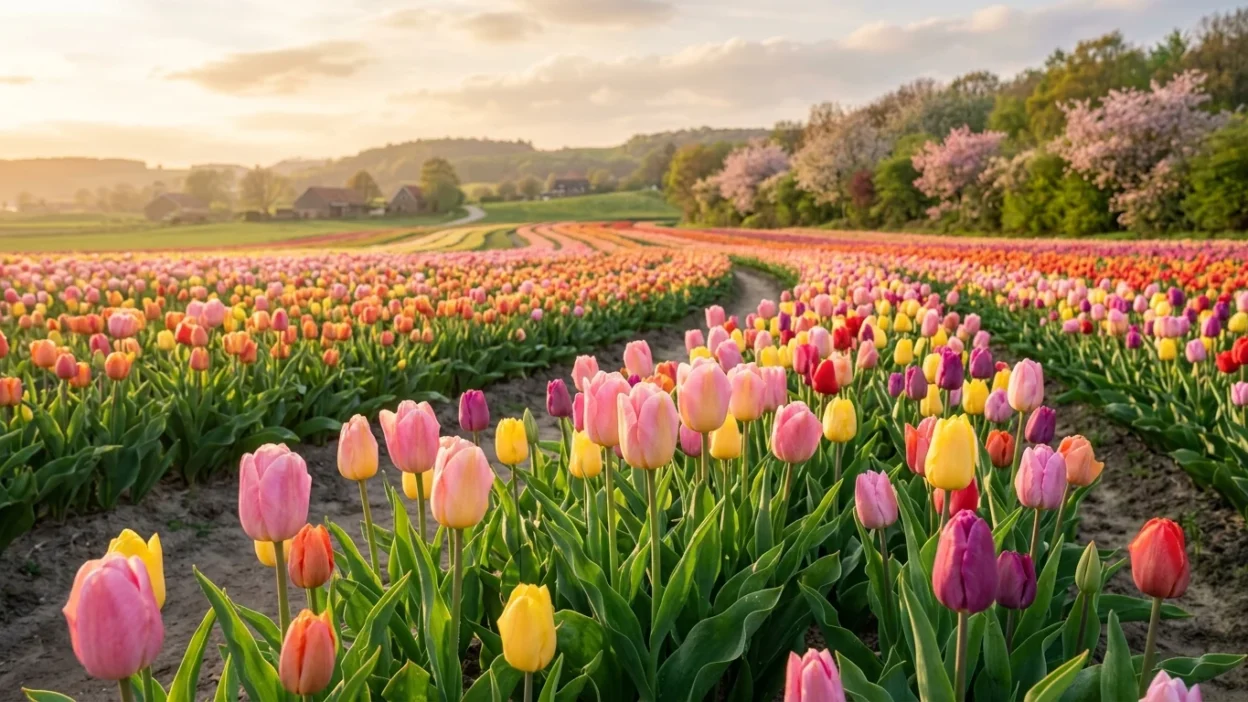
Tulip symbolism has captured hearts for centuries because it reflects love, renewal, and graceful beauty so naturally.
Whenever people see tulips, they often think about fresh beginnings, affection, and joyful emotions, so these flowers strongly connect with growth and emotional expression.
As a result, tulip symbolism represents perfect love, hope, and personal transformation.
Tulip Symbolism Meaning (Clear Definition)
At its core, tulip symbolism represents love, renewal, beauty, and emotional expression. Because tulips bloom boldly after colder seasons, they symbolize fresh starts and positive change.
At the same time, tulip symbolism reflects happiness, abundance, confidence, and emotional warmth.
What Does Tulip Symbolism Represent?
Tulip symbolism represents several meaningful ideas, and each meaning deepens its significance.
First, it represents love, since tulips have long connected with affection and emotional connection. Next, it reflects renewal, so it symbolizes fresh opportunities and personal growth. In addition, tulip symbolism represents happiness, because colorful tulips create uplifting and joyful feelings.
Moreover, it symbolizes elegance and confidence, encouraging authenticity and appreciation. Therefore, tulip symbolism inspires hope, positivity, and meaningful relationships.
Key symbolic meanings include:
- Love and affection
- Renewal and new beginnings
- Happiness and positivity
- Beauty and elegance
- Growth and emotional warmth
Spiritual Meaning of Tulip Symbolism
Spiritually, tulip symbolism strongly connects with renewal and emotional openness. Because tulips bloom brightly after seasonal change, they symbolize transformation and spiritual growth.
Moreover, tulip symbolism encourages you to welcome opportunities and trust life’s natural timing. As you grow spiritually, you begin to appreciate change and emotional balance.
Therefore, many spiritual interpretations view tulips as symbols of hope, growth, and joyful renewal.
Biblical / Religious Meaning of Tulip Symbolism
In religious contexts, tulip symbolism often reflects beauty, gratitude, and renewal. Flowers frequently symbolize creation, blessing, and appreciation.
At the same time, tulip symbolism reflects hope and graceful growth. Because tulips bloom with beauty and simplicity, they symbolize trust and thankfulness.
Therefore, tulip symbolism highlights renewal, peace, and appreciation.
Tulip Symbolism in History and Culture
Throughout history, tulip symbolism appears in many cultures with rich interpretations. People often connect tulips with prosperity, love, and elegance.
In many traditions, tulips symbolize abundance and joyful beginnings. Because tulips bloom seasonally, they also reflect change and renewal.
Overall, tulip symbolism consistently reflects love, beauty, and optimism across cultures.
Tulip Symbolism in Literature and Art
In literature and art, tulip symbolism often expresses affection, beauty, and emotional richness. Writers use tulips to represent meaningful connections and hope.
At the same time, artists portray tulips as symbols of elegance and emotional warmth. Because of their balanced form, they also reflect harmony and positivity.
Therefore, tulip symbolism often highlights love and renewal.
Dream Meaning of Tulip Symbolism
When you see tulips in a dream, it often signals emotional growth and happiness. For example, blooming tulips may suggest positive change and fulfilling relationships. Meanwhile, receiving tulips can indicate appreciation and affection.
If tulips appear vibrant and healthy, you may experience optimism and progress. On the other hand, wilted tulips may reflect temporary disappointment or changing emotions.
Therefore, tulip dreams often encourage joy, healing, and new opportunities.
Modern Meaning of Tulip Symbolism
Today, tulip symbolism continues to represent love and positivity in modern life. People often connect tulips with celebrations, emotional expression, and meaningful moments.
At the same time, tulip symbolism reflects confidence and fresh beginnings. Because modern life changes quickly, tulips remind people to appreciate growth and beauty.
As a result, tulip symbolism remains meaningful and inspiring today.
FAQs
What does tulip symbolism mean?
Tulip symbolism represents love, renewal, beauty, and emotional warmth while also reflecting happiness and growth.
Why do tulips symbolize love?
Tulips symbolize love because they have long represented affection, beauty, and meaningful emotional connections.
What does seeing tulips mean spiritually?
Seeing tulips spiritually often means renewal, hope, emotional healing, and welcoming positive change.
Is tulip symbolism positive or negative?
Tulip symbolism is mostly positive because it represents love and renewal, although fading tulips can reflect transitions.
What do tulips in a dream symbolize?
Tulips in a dream usually symbolize happiness, relationships, emotional growth, or fresh opportunities.
Conclusion
Tulip symbolism continues to inspire because it represents love, renewal, and beauty so naturally.
As you reflect on its meaning, you begin to understand how meaningful change often arrives gently and beautifully.
Ultimately, tulip symbolism encourages you to welcome growth, appreciate relationships, and move through life with hope, confidence, and joy.

Cedric Halewood is known for his intricate historical narratives.
His work reflects a deep fascination with lost civilizations.
He lives near the coast, where he finds inspiration in the sea.