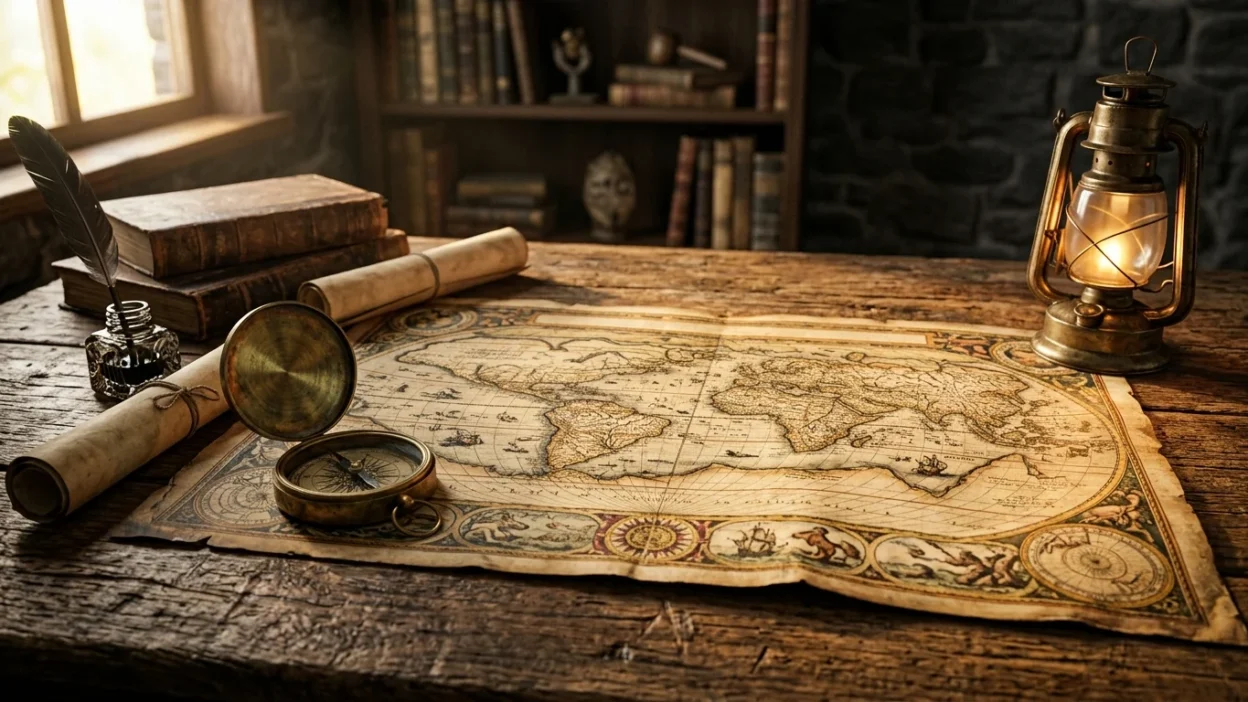
Map symbolism has fascinated people throughout history because it represents much more than a tool for finding locations. Across cultures, religion, mythology, literature, and modern life, maps symbolize guidance, purpose, discovery, wisdom, direction, exploration, knowledge, and personal growth.
While maps help travelers reach their destinations, their deeper symbolic meaning reminds us that life itself is a journey filled with choices, lessons, and opportunities. Whether appearing in ancient manuscripts, dreams, works of art, or personal adventures, map symbolism encourages us to explore the unknown with confidence and curiosity.
The meaning of map symbolism extends beyond geography. Spiritually, a map often represents divine guidance, life’s purpose, and the search for truth. Emotionally, it symbolizes clarity, preparation, and the courage to move toward new experiences despite uncertainty. Throughout literature and art, maps have become enduring symbols of destiny, exploration, and transformation. Even in today’s world, they continue to represent planning, ambition, hope, and lifelong learning. Understanding map symbolism helps us appreciate why this timeless image remains one of the world’s most meaningful symbols of direction, inspiring us to trust the journey while staying focused on our goals.
Map Symbolism Meaning (Clear Definition)
Map symbolism refers to the deeper symbolic meaning of a map as a representation of guidance, direction, purpose, exploration, wisdom, knowledge, discovery, and personal growth. Although maps were originally created to help people navigate physical landscapes, they have become universal symbols of life’s journey and the pursuit of meaningful goals.
A map commonly symbolizes:
- Guidance and direction
- Purpose and planning
- Exploration and discovery
- Wisdom and knowledge
- Hope for the future
- Personal growth
- New opportunities
Rather than simply showing roads and places, a map reminds us that every decision helps shape our journey through life.
Quick Symbolism Overview
| Symbol | Meaning |
|---|---|
| Guidance | Finding the right path |
| Direction | Moving toward goals |
| Exploration | Discovering new possibilities |
| Wisdom | Learning through experience |
| Knowledge | Understanding the world |
| Hope | Believing in future opportunities |
| Growth | Personal development and transformation |
What Does Map Symbolism Represent?
At its heart, map symbolism represents the importance of having direction while remaining open to discovery. Just as a map helps travelers navigate unfamiliar places, it encourages us to make thoughtful decisions and embrace new opportunities with confidence.
The most common symbolic meanings include:
- Guidance: Finding clarity in uncertain situations.
- Purpose: Living with meaningful direction.
- Exploration: Seeking new knowledge and experiences.
- Wisdom: Learning from every journey.
- Hope: Trusting the future.
- Preparation: Planning before taking action.
- Transformation: Growing through life’s adventures.
These meanings explain why maps have remained powerful symbols of exploration and self-discovery across generations.
Spiritual Meaning of Map Symbolism
Spiritually, map symbolism represents divine guidance, inner wisdom, faith, purpose, and spiritual growth. Many spiritual traditions view life as a journey, making the map a meaningful symbol of following the right path with trust and perseverance.
Spiritually, a map may symbolize:
- Divine guidance
- Spiritual direction
- Faith during uncertainty
- Inner wisdom
- Hope and purpose
- Personal transformation
- Trust in life’s journey
The map teaches that spiritual growth is not about reaching a destination quickly but about learning valuable lessons along the way. It reminds us that every experience contributes to a greater purpose.
Many people also see maps as symbols of discovering their true calling while remaining faithful to their values.
Biblical / Religious Meaning of Map Symbolism
Although maps are not directly emphasized in the Bible, map symbolism closely reflects biblical themes of guidance, wisdom, faith, purpose, and God’s direction.
Religious symbolism includes:
- Following God’s guidance.
- Walking the path of righteousness.
- Seeking wisdom.
- Trusting divine timing.
- Living according to purpose.
Across many faith traditions, the map symbolizes the spiritual journey, encouraging believers to remain faithful while following truth and wisdom.
Map Symbolism in History and Culture
Throughout history, maps have symbolized exploration, knowledge, ambition, and human curiosity.
Ancient civilizations carefully created maps to record trade routes, kingdoms, oceans, and discoveries. As exploration expanded, maps became symbols of opportunity, progress, learning, and the desire to understand the world.
Different cultures associate maps with:
- Exploration
- Discovery
- Knowledge
- Adventure
- Opportunity
- Progress
- Curiosity
Today, maps continue to represent travel, education, and lifelong learning across cultures worldwide.
Map Symbolism in Literature and Art
In literature and visual art, map symbolism often represents destiny, adventure, identity, wisdom, and transformation.
Authors frequently use maps to explore themes such as:
- Self-discovery
- Personal growth
- Adventure
- Hope
- Courage
- Exploration
- New beginnings
Artists often illustrate vintage maps alongside compasses, ships, or stars to symbolize life’s journey and the search for purpose. Hidden paths on a map frequently represent untapped opportunities and future possibilities.
These creative interpretations have made maps enduring symbols of curiosity and meaningful exploration.
Dream Meaning of Map Symbolism
Dreaming about a map often reflects your search for direction, clarity, or purpose.
Common dream interpretations include:
- Reading a map: Seeking guidance before making decisions.
- Finding a map: Discovering new opportunities.
- Losing a map: Feeling uncertain about your direction.
- Drawing a map: Planning for the future.
- An old map: Learning from past experiences.
- A detailed map: Confidence and preparation.
These dreams often encourage trusting yourself, planning carefully, and remaining open to new possibilities.
Modern Meaning of Map Symbolism
Today, map symbolism continues to represent planning, exploration, resilience, and personal development.
Modern interpretations include:
- Finding life purpose
- Career planning
- Personal growth
- Education
- Adventure
- Goal setting
- Lifelong learning
Maps remain popular in travel, education, business, tattoos, and home décor because they symbolize exploration, ambition, and curiosity. Their timeless message reminds us that every meaningful destination begins with the courage to take the first step.
Frequently Asked Questions
What does map symbolism mean?
Map symbolism represents guidance, direction, exploration, purpose, wisdom, knowledge, hope, and personal growth throughout life’s journey.
Is a map a symbol of guidance?
Yes. A map symbolizes guidance because it helps people navigate challenges, make decisions, and move toward meaningful goals.
What is the spiritual meaning of a map?
Spiritually, a map symbolizes divine guidance, faith, purpose, inner wisdom, and following the right path through life’s journey.
What does dreaming about a map mean?
Dreaming about a map often represents seeking direction, making important decisions, planning for the future, or discovering new opportunities.
Why is the map important in symbolism?
The map is important because it represents exploration, wisdom, preparation, discovery, hope, and the confidence to pursue meaningful destinations.
Final Thoughts
Map symbolism continues to inspire people because it reminds us that every meaningful life is shaped by the paths we choose to follow. It represents guidance, purpose, exploration, wisdom, hope, knowledge, resilience, and personal growth, encouraging us to embrace every journey with curiosity and confidence.
Whether encountered in history, religion, dreams, literature, art, or modern life, the map teaches that success comes from learning, adapting, and trusting the process. By understanding map symbolism, we discover that life’s greatest adventures begin with faith, wisdom, courage, determination, and a willingness to explore the unknown.

Rowan Blythecroft crafts atmospheric fiction filled with mystery and folklore.
Her stories often blur the line between reality and imagination.
She spends most of her days wandering forests and writing by candlelight.