
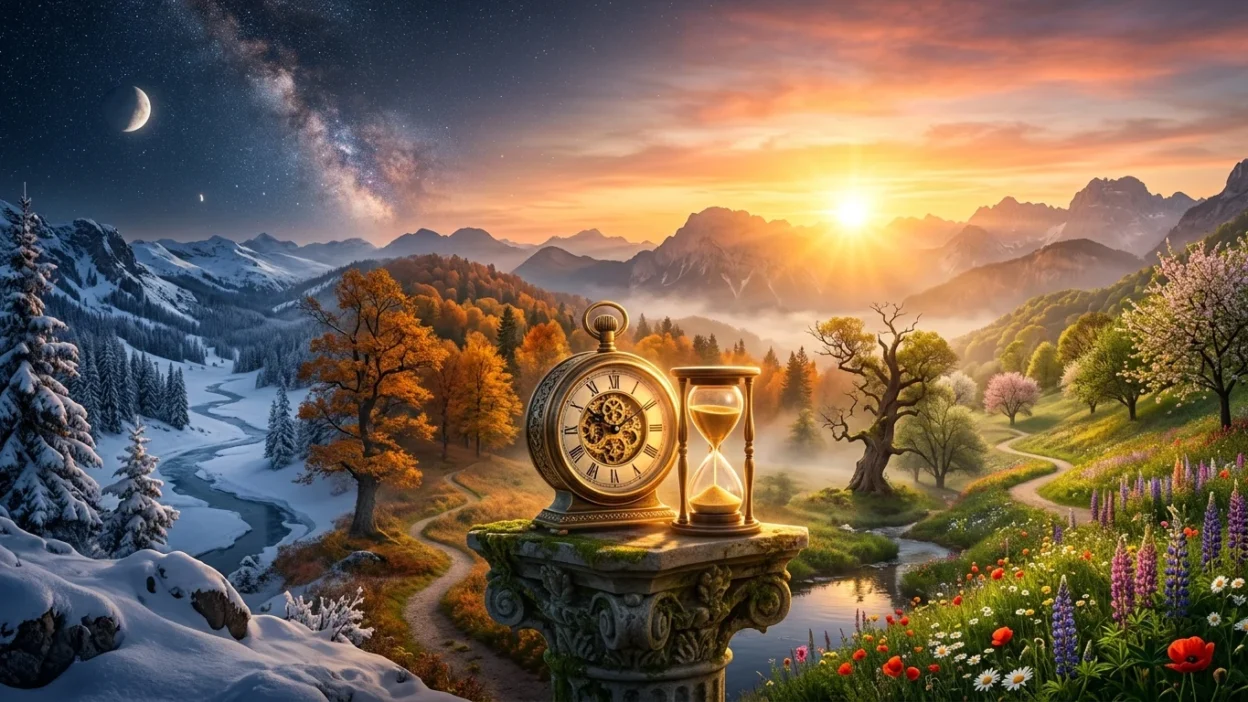
Time symbolism has shaped human thought for thousands of years because it represents far more than the passing of seconds, minutes, and years. Throughout history, religion, philosophy, literature, and everyday life, time symbolizes change, growth, wisdom, mortality, patience, destiny, opportunity, and the continuous journey of life.
Every moment reminds us that life is constantly moving forward, encouraging us to appreciate the present while preparing for the future. Whether explored through ancient teachings, dreams, works of art, or personal experiences, time symbolism inspires us to live with purpose, gratitude, and intention.
The meaning of time symbolism extends beyond calendars and clocks. Spiritually, time often represents divine timing, life’s natural seasons, and the unfolding of a greater purpose. Emotionally, it symbolizes healing, resilience, and the understanding that every challenge eventually passes. Throughout literature and art, time has become an enduring symbol of transformation, memory, hope, and renewal. Even today, it continues to remind us that every decision shapes our future and every experience contributes to our growth. Understanding time symbolism helps us appreciate why time remains one of humanity’s most powerful symbols of wisdom, balance, and the precious gift of life.
Time Symbolism Meaning (Clear Definition)
Time symbolism refers to the deeper symbolic meaning of time as a representation of change, growth, mortality, wisdom, patience, destiny, opportunity, and life’s continuous journey. Although time is measured by clocks and calendars, its symbolic meaning reflects the cycles of life, personal development, and the value of every moment.
Time commonly symbolizes:
- The passage of life
- Personal growth
- Change and transformation
- Wisdom through experience
- Patience and endurance
- Destiny and purpose
- New beginnings and fresh opportunities
Rather than simply marking the hours, time reminds us that every moment offers the chance to learn, grow, and create meaningful memories.
Quick Symbolism Overview
| Symbol | Meaning |
|---|---|
| Change | Life’s constant evolution |
| Growth | Learning through experience |
| Wisdom | Knowledge gained over time |
| Patience | Trusting the right moment |
| Destiny | Following life’s purpose |
| Opportunity | Embracing new beginnings |
| Mortality | Appreciating life’s precious moments |
What Does Time Symbolism Represent?
At its heart, time symbolism represents the ongoing journey of life and the importance of embracing every stage with wisdom and gratitude. It teaches that while nothing remains the same forever, every season brings valuable lessons.
The most common symbolic meanings include:
- Change: Accepting life’s natural cycles.
- Growth: Becoming stronger through experience.
- Wisdom: Learning from the past.
- Patience: Waiting for the right opportunities.
- Opportunity: Making the most of each moment.
- Purpose: Living intentionally.
- Renewal: Welcoming fresh beginnings.
These meanings explain why time has become one of the world’s most universal symbols of life and transformation.
Spiritual Meaning of Time Symbolism
Spiritually, time symbolism represents divine timing, faith, patience, personal growth, and spiritual awakening. Many spiritual traditions teach that every event happens according to a greater plan and that every season of life serves a meaningful purpose.
Spiritually, time may symbolize:
- Divine timing
- Spiritual growth
- Faith and trust
- Inner wisdom
- Healing
- Personal transformation
- The cycle of life
Time teaches that spiritual maturity develops gradually through experience, reflection, and perseverance. It encourages us to trust the process rather than rushing toward outcomes.
Many people also see time as a reminder to focus on what truly matters while living with compassion and gratitude.
Biblical / Religious Meaning of Time Symbolism
In the Bible, time symbolism reflects God’s perfect timing, wisdom, patience, purpose, and the changing seasons of life. Scripture often teaches that there is an appropriate time for every purpose and that faith requires trusting divine timing.
Religious symbolism includes:
- Trusting God’s timing.
- Living wisely.
- Patience through faith.
- Preparing for the future.
- Appreciating every season of life.
Across many religions, time is viewed as a sacred gift that encourages growth, gratitude, and faithful living.
Time Symbolism in History and Culture
Throughout history, time has symbolized order, progress, wisdom, and the rhythm of civilization.
Ancient cultures observed the movement of the sun, moon, and stars to understand seasons, agriculture, and daily life. Over time, these observations turned time into a symbol of harmony, discipline, and the natural cycles of existence.
Different cultures associate time with:
- Wisdom
- Change
- Tradition
- Renewal
- Progress
- Patience
- Legacy
Today, time continues to represent both the continuity of history and the opportunities of the future.
Time Symbolism in Literature and Art
In literature and visual art, time symbolism often represents mortality, destiny, memory, transformation, and hope.
Authors frequently use time to explore themes such as:
- Life’s journey
- Personal growth
- Love
- Reflection
- Opportunity
- Change
- New beginnings
Artists often portray flowing rivers, changing seasons, sunrise, sunset, clocks, or hourglasses to symbolize the passing of time and the beauty of life’s temporary moments.
These creative interpretations have made time one of the most meaningful themes in storytelling.
Dream Meaning of Time Symbolism
Dreams involving time often reflect your awareness of priorities, life changes, or emotional growth.
Common dream interpretations include:
- Watching time pass: Becoming aware of important opportunities.
- Running out of time: Feeling pressure or responsibility.
- Time moving slowly: Practicing patience or waiting for change.
- Time moving quickly: Major life transitions.
- Looking at a calendar: Planning for the future.
- Repeating moments: Learning an important life lesson.
These dreams often encourage appreciating the present, making thoughtful decisions, and trusting your personal journey.
Modern Meaning of Time Symbolism
Today, time symbolism continues to represent balance, mindfulness, productivity, and intentional living.
Modern interpretations include:
- Personal development
- Goal setting
- Work-life balance
- Healing
- Self-improvement
- Mindfulness
- Living with purpose
Time remains central to education, business, relationships, and personal success because it reminds us that every meaningful achievement requires patience, consistency, and dedication. Its timeless message encourages us to invest our moments wisely and cherish the people and experiences that truly matter.
Frequently Asked Questions
What does time symbolism mean?
Time symbolism represents change, growth, wisdom, patience, destiny, opportunity, mortality, and the continuous journey of life.
Is time a symbol of change?
Yes. Time symbolizes change because it reflects the constant movement of life, personal growth, and the natural cycles of existence.
What is the spiritual meaning of time?
Spiritually, time symbolizes divine timing, faith, healing, wisdom, personal growth, and trusting life’s greater purpose.
What does dreaming about time mean?
Dreaming about time often represents important life decisions, personal priorities, emotional growth, or preparation for future opportunities.
Why is time important in symbolism?
Time is important because it symbolizes life’s journey, transformation, wisdom, patience, opportunity, and the value of every precious moment.
Final Thoughts
Time symbolism continues to inspire people because it reminds us that every moment carries the power to shape our lives. It represents change, growth, wisdom, patience, destiny, resilience, opportunity, and personal transformation, encouraging us to embrace every season with hope and purpose.
Whether encountered in history, religion, dreams, literature, art, or modern life, time teaches that life’s greatest achievements come through steady progress and meaningful choices. By understanding time symbolism, we learn that true fulfillment comes from using each day with gratitude, faith, compassion, courage, and an appreciation for life’s ever-unfolding journey.

Alistair Fenwicke is a quiet observer of rural life and forgotten histories.
His novels explore memory, solitude, and the passing of time.
He writes from a small countryside cottage surrounded by fields.