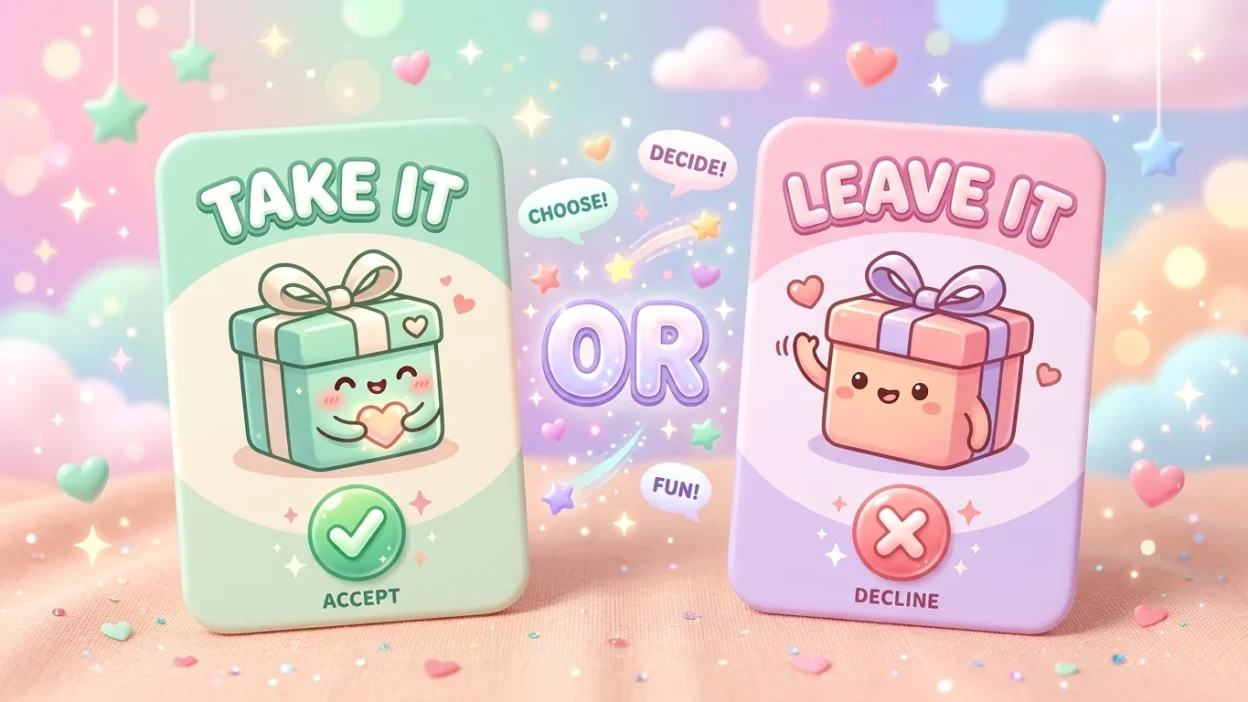
Have you ever heard someone say, “Take it or leave it” and wondered what they really meant? This common English expression is often used during negotiations, conversations, and everyday situations when someone is unwilling to change their offer or opinion.
In this guide, you’ll learn the meaning of take it or leave it, where it comes from, how to use it correctly, examples in sentences, and when to avoid using it.
Quick Answer
“Take it or leave it” means:
Accept something exactly as it is or reject it completely. There will be no changes or compromises.
It is commonly used when a person presents a final offer, decision, or condition.
What Does “Take It or Leave It” Mean?
The phrase take it or leave it is an idiom in English.
It tells someone that they have only two choices:
- Accept the offer.
- Decline the offer.
There is no room for negotiation.
For example:
- “I’ll sell you the bike for $100—take it or leave it.”
- “These are my terms. Take it or leave it.”
The expression can sound confident, firm, or even slightly rude depending on the tone of voice.
Take It or Leave It Meaning Table
| Phrase | Meaning | Example |
|---|---|---|
| Take it or leave it | Accept it as it is or reject it | “The price is final—take it or leave it.” |
Examples of “Take It or Leave It” in Sentences
Here are some common examples:
- The landlord said, “The rent is $1,200 a month—take it or leave it.”
- She offered me her old laptop at a discount and said, “Take it or leave it.”
- My boss gave me two vacation dates and told me to take it or leave it.
- The seller refused to negotiate and simply said, “Take it or leave it.”
- That’s my final decision—take it or leave it.
When Do People Use This Expression?
People often use take it or leave it in situations involving:
- Negotiations
- Business deals
- Prices and sales
- Personal boundaries
- Final decisions
- Rules and conditions
It usually communicates that the speaker has reached their limit and does not wish to discuss the matter further.
Is “Take It or Leave It” Rude?
Not necessarily.
The phrase can sound:
- Neutral
- Firm
- Direct
- Confident
- Rude (depending on tone)
For example:
- Friendly: “I’d love for you to join us, but we’re leaving at 7 PM—take it or leave it!”
- Rude: “I don’t care what you think. Take it or leave it.”
Your tone and relationship with the listener make a big difference.
Similar Expressions
Here are some phrases with similar meanings:
- That’s my final offer.
- It is what it is.
- No negotiations.
- Accept it or decline it.
- The choice is yours.
- This is non-negotiable.
- That’s the deal.
Common Mistakes
People sometimes misunderstand the phrase and think it means:
- “Take your time deciding.” ❌
- “Think about it later.” ❌
- “There are other options available.” ❌
The expression actually means:
“These are the only terms being offered.”
American vs British English
The idiom take it or leave it is used in both American and British English.
There are no spelling or meaning differences between the two.
Related Words and LSI Keywords
- English idioms
- common expressions
- final offer
- negotiation phrases
- business English
- everyday English
- idiom meanings
- conversational English
- English vocabulary
- speaking English
- language learning
- phrase examples
- English usage
- communication skills
Tips for Using “Take It or Leave It”
- Use it when you have a final offer.
- Be mindful of your tone.
- Avoid using it in very formal situations.
- Remember that it can sound blunt.
- Consider softer alternatives when appropriate.
Frequently Asked Questions
What does “take it or leave it” mean?
It means to accept something exactly as it is or reject it completely.
Is “take it or leave it” an idiom?
Yes. It is a common English idiom used in conversations and negotiations.
Is the phrase rude?
It can be, depending on the speaker’s tone and the situation.
Can I use it in business?
Yes, but use it carefully, as it may sound too direct in professional settings.
Is “take it or leave it” used in American English?
Yes. It is commonly used in both American and British English.
What is another way to say “take it or leave it”?
You can say:
- “That’s my final offer.”
- “These are my terms.”
- “It’s non-negotiable.”
- “The choice is yours.”
Summary
The phrase take it or leave it means accepting something exactly as offered or rejecting it altogether. It is commonly used in negotiations, business discussions, and everyday conversations when someone is presenting a final decision or non-negotiable offer.
While the expression is useful and widely understood, remember that tone matters. Used politely, it can communicate confidence and clarity. Used harshly, it may come across as dismissive or rude. Understanding when and how to use this idiom will help you communicate more effectively in English.

Alistair Fenwicke is a quiet observer of rural life and forgotten histories.
His novels explore memory, solitude, and the passing of time.
He writes from a small countryside cottage surrounded by fields.