Have you ever written agast when you meant aghast? You’re not alone! Because the word isn’t used every day, many people accidentally drop the silent “h” when spelling it. However, only one spelling is correct in modern English.
In this guide, you’ll learn the difference between agast vs aghast, their meanings, examples, common mistakes, and an easy memory trick to help you remember the correct spelling.
Quick Answer
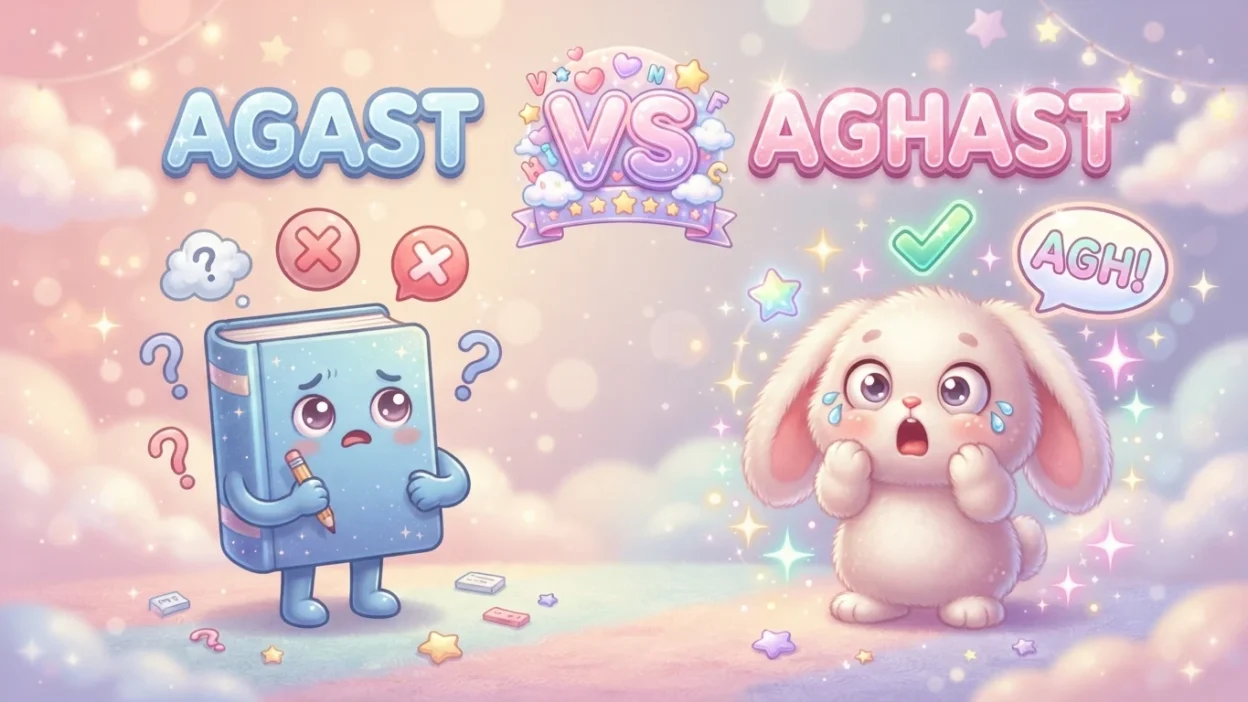
- Aghast ✅ — Correct spelling.
- Agast ❌ — Incorrect spelling.
Use aghast whenever you mean shocked, horrified, or extremely surprised.
Examples:
- She was aghast when she saw the damage.
- The audience looked aghast at the unexpected announcement.
What Do Agast and Aghast Mean?
Although these words look similar, only one is accepted in standard English.
What Is Aghast?
Aghast is an adjective that means:
- Extremely shocked.
- Filled with horror or amazement.
- Deeply surprised or appalled.
Examples:
- I was aghast at the news.
- They stood aghast after hearing the verdict.
- She looked aghast when her phone disappeared.
- The teacher was aghast by the students’ behavior.
What Is Agast?
Agast is a misspelling of aghast in modern English.
Historically, an older form of the word appeared in Middle English, but today it is not considered correct in standard usage. If you’re writing for school, work, or everyday communication, you should always use aghast.
Agast vs Aghast Comparison Table
| Feature | Agast | Aghast |
|---|---|---|
| Correct Modern English Word | ❌ No | ✅ Yes |
| Dictionary Acceptance | Historical Form | Yes |
| Meaning | Historical Variant | Shocked or horrified |
| Used in Formal Writing | No | Yes |
| Used in Everyday English | No | Common |
Why Is “Aghast” Correct?
The correct modern spelling is:
A-G-H-A-S-T
The silent “h” is an important part of the word’s standard spelling. Many people accidentally omit it because it is not pronounced strongly in everyday speech.
Therefore:
- Aghast ✅ — Correct spelling.
- Agast ❌ — Incorrect spelling for modern English.
Examples of Aghast in Sentences
- The family was aghast at the sudden announcement.
- He looked aghast when he realized his mistake.
- The crowd was aghast by the shocking performance.
- I was absolutely aghast at what I had witnessed.
- She sat there aghast, unable to speak.
- The manager was aghast after reviewing the report.
- Everyone seemed aghast by the unexpected outcome.
Common Mistakes People Make
Many writers accidentally:
- Spell the word as agast.
- Forget the silent “h.”
- Assume pronunciation determines spelling.
- Miss the typo while proofreading.
Incorrect:
- ❌ She was agast when she heard the news.
Correct:
- ✅ She was aghast when she heard the news.
Simple Memory Trick
💡 Memory Trick
- When you’re shocked, you might gasp “AHH!”
- Think: Aghast begins with “AGH!”—the sound of surprise.
Rule: If something leaves you shocked or horrified, remember the silent “h” in aghast.
When Should You Use Aghast?
Use aghast when describing:
- Shock
- Horror
- Amazement
- Disbelief
- Unexpected events
- Emotional reactions
Examples:
- Looked aghast
- Absolutely aghast
- Stood aghast
- Left everyone aghast
- Was aghast at the news
When Should You Use Agast?
Never in modern English writing.
You may encounter it only in:
- Historical texts
- Middle English references
- Language studies
For contemporary English, always use aghast.
American vs British English
There is no spelling difference between American and British English.
Both varieties use:
- ✅ Aghast
- ❌ Agast
The spelling is identical throughout the English-speaking world.
Related Words and LSI Keywords
- aghast meaning
- aghast definition
- shocked expression
- horrified meaning
- surprised and appalled
- English spelling rules
- commonly misspelled words
- vocabulary guide
- adjective examples
- language learning
- proofreading tips
- correct English usage
- grammar guide
- word comparison
Tips for Remembering the Difference
- Always include the silent “h.”
- Think of “AGH!” as a surprised reaction.
- Remember that aghast expresses shock or horror.
- Avoid spelling words based solely on pronunciation.
- Use spell check when you’re unsure.
Frequently Asked Questions
Is agast a real word?
It appeared historically in older forms of English, but it is not used in modern standard English.
Which is correct: agast or aghast?
Aghast is the correct spelling in contemporary English.
What does aghast mean?
It means extremely shocked, horrified, or astonished.
Is aghast used in American and British English?
Yes. Both varieties use the same spelling.
Why does aghast have an “h”?
The spelling comes from the historical development of the word and has been standardized in modern English.
Can I use agast in formal writing?
No. Always use aghast unless you are discussing historical language forms.
Summary
The difference between agast vs aghast is simple. Aghast is the correct modern English spelling and is used to describe feelings of shock, horror, or extreme surprise. Agast is an outdated or historical form that should not be used in everyday writing.
Whenever you’re writing about being shocked or astonished, remember that aghast keeps its silent “h.” That one little letter makes all the difference.

Rowan Blythecroft crafts atmospheric fiction filled with mystery and folklore.
Her stories often blur the line between reality and imagination.
She spends most of her days wandering forests and writing by candlelight.