Have you ever come across breeched and breached and wondered if they mean the same thing? Although these words look almost identical, they have completely different meanings. Because only one letter separates them, many writers accidentally use the wrong one.
In this guide, you’ll learn the difference between breeched vs breached, their meanings, examples, common mistakes, and simple tips to remember which word fits your sentence.
Quick Answer
Here’s the simple answer:
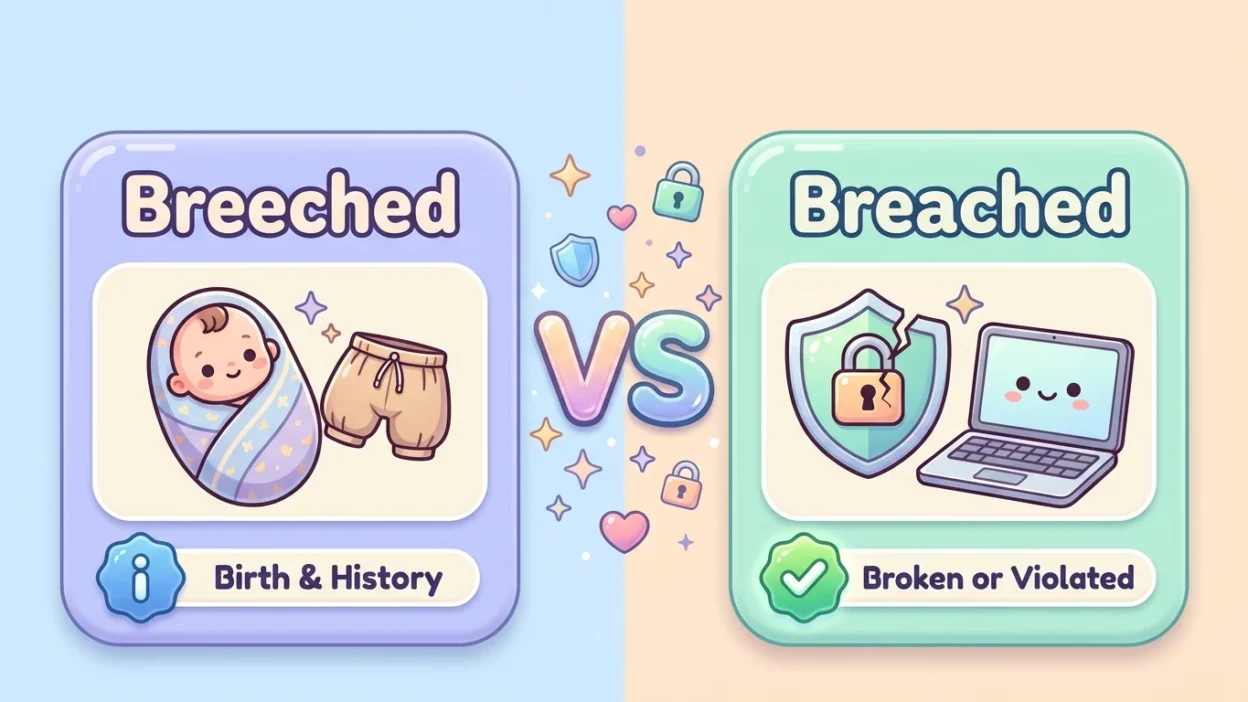
- Breached ✅ means broken, violated, crossed, or broken through, such as a contract, security system, or wall.
- Breeched ✅ means dressed in breeches (short trousers) or, in rare historical contexts, delivered feet-first during birth.
Although both are real English words, breached is far more common in modern English.
What Does Breeched vs Breached Mean?
These words have different origins and should never be used interchangeably.
What Is Breached?
Breached is the past tense of breach. It means to break through, violate, or fail to follow something.
Examples:
- Hackers breached the company’s database.
- The soldiers breached the castle wall.
- He breached the agreement by sharing confidential information.
- The dam was breached after heavy rain.
The word is common in business, cybersecurity, law, construction, and everyday English.
What Is Breeched?
Breeched is the past tense of breech. It has two uncommon meanings:
- Dressed in breeches, especially in historical contexts involving young boys.
- Delivered in a breech position, meaning feet or buttocks first during childbirth.
Examples:
- The child was breeched at the age of five, according to old traditions.
- The baby was breeched, requiring careful medical attention.
Today, breeched is rarely used outside historical or specialized medical discussions.
Breeched vs Breached Comparison Table
| Feature | Breeched | Breached |
|---|---|---|
| Meaning | Dressed in breeches or in breech birth | Broken, violated, or broken through |
| Common Usage | Rare | Very common |
| Used In | History, medicine | Business, law, cybersecurity, construction |
| Modern Everyday English | Rarely | Frequently |
Examples of Breached in Sentences
Here are some common examples:
- The company’s data was breached.
- Criminals breached the building overnight.
- The peace treaty was breached.
- Floodwaters breached the riverbank.
- The athlete breached the competition rules.
Examples of Breeched in Sentences
Although uncommon, these examples are correct:
- The young prince was breeched during childhood.
- Historical records mention when boys were first breeched.
- The infant was breeched, leading doctors to perform additional procedures.
Common Mistakes People Make
Many writers confuse these words because they look alike.
Common mistakes include:
- Writing breeched when talking about a security breach.
- Using breached to describe a breech birth.
- Assuming both words are alternative spellings.
- Ignoring the different meanings.
Always consider the context before choosing the word.
Simple Memory Trick
Here’s an easy way to remember them:
- Breached = Broken
- Breeched = Breech (birth or breeches)
Think:
A security system gets breached—not breeched.
When Should You Use Breached?
Use breached when referring to:
- Security breaches
- Data breaches
- Broken contracts
- Broken walls
- Violated rules
- Flood barriers
- Legal agreements
When Should You Use Breeched?
Use breeched only when referring to:
- Historical clothing (breeches)
- Traditional childhood customs
- Breech birth or childbirth
Outside these situations, you probably need breached instead.
American vs British English
There is no spelling difference between American English and British English.
Both varieties use:
- ✅ Breached for broken or violated.
- ✅ Breeched for breeches or breech birth.
The meanings remain the same in both forms of English.
Related Words and LSI Keywords
Related terms include:
- breach
- breech
- data breach
- security breach
- contract violation
- firewall breach
- cyberattack
- breech birth
- breeches
- historical clothing
- English vocabulary
- word comparison
- commonly confused words
- grammar guide
- legal terminology
- cybersecurity terms
- spelling differences
- English usage
- language learning
- writing correctly
Tips for Remembering the Difference
Keep these tips in mind:
- Think breached = broken.
- Think breeched = breech birth or breeches.
- If you’re discussing cybersecurity or contracts, choose breached.
- If you’re discussing childbirth or historical clothing, choose breeched.
Frequently Asked Questions
What is the difference between breeched and breached?
Breached means broken, violated, or crossed, while breeched refers to wearing breeches or a breech birth.
Are both breeched and breached real words?
Yes. Both are correct English words, but they have completely different meanings.
Which word is more common?
Breached is far more common in modern English because it is widely used in law, business, cybersecurity, and everyday writing.
Is a data breach spelled breached or breeched?
Always use breached for data breaches and security breaches.
What does breeched mean in childbirth?
It refers to a breech birth, where the baby is positioned feet or buttocks first before delivery.
Do American and British English use these words differently?
No. Both American and British English use breached and breeched with the same meanings.
Summary
The difference between breeched vs breached comes down to context. Breached means something has been broken, violated, or broken through, making it the correct word for topics like cybersecurity, contracts, laws, walls, and flood barriers.
Breeched, on the other hand, is a rare word connected to historical clothing or breech childbirth. Whenever you’re writing about security, legal agreements, or barriers, choose breached.
Reserve breeched only for its specialized historical or medical meanings. Knowing this distinction will help you write with greater accuracy and confidence.

Rowan Blythecroft crafts atmospheric fiction filled with mystery and folklore.
Her stories often blur the line between reality and imagination.
She spends most of her days wandering forests and writing by candlelight.