Have you ever wondered whether you should write informations or information? You’re not alone. This is a common mistake, especially for English learners who naturally expect information to work like countable nouns such as facts, details, or documents.
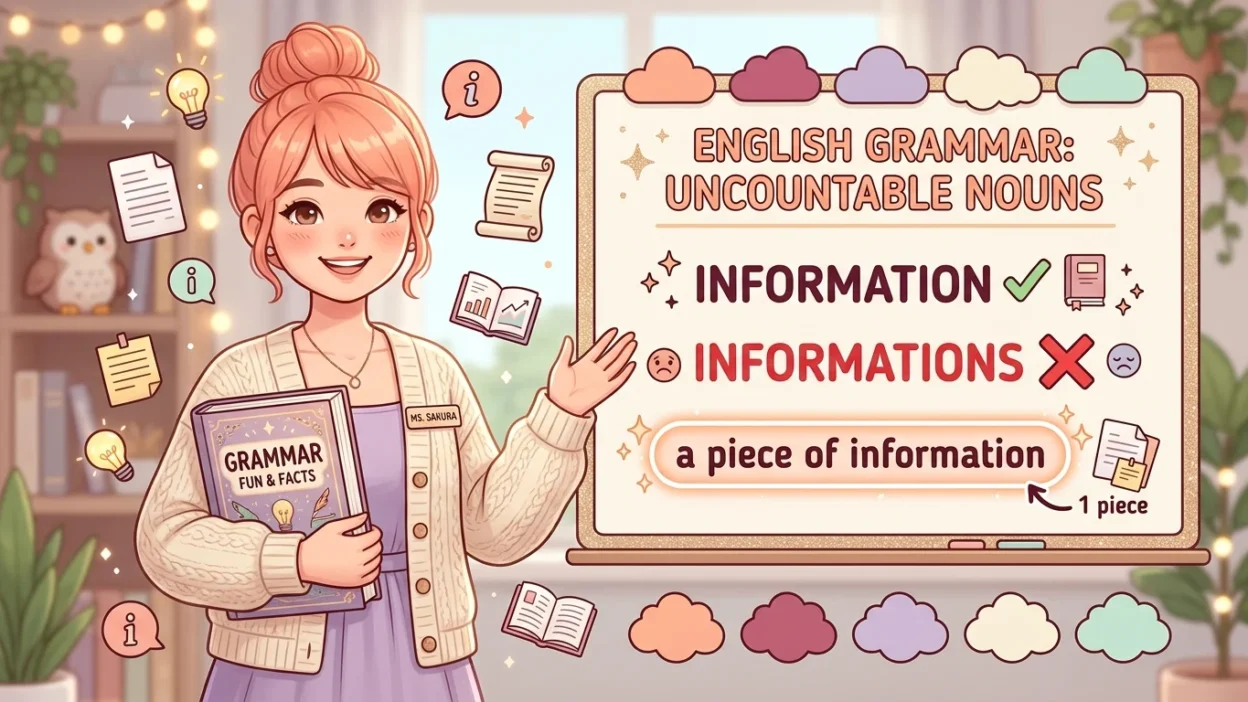
The important thing to remember is that information is normally an uncountable noun in standard English. This means we generally do not make it plural by adding -s. In most situations, information is the correct word, while informations is considered incorrect or nonstandard in ordinary English.
Quick Answer
The simple answer is:
- Information ✅ = correct standard English.
- Informations ❌ = generally incorrect in standard English.
Examples:
- Please send me more information. ✅
- I need some information about the course. ✅
- She gave us useful information. ✅
- Please send me more informations. ❌
If you want to talk about multiple pieces of information, use expressions such as:
- pieces of information
- some information
- details
- facts
- items of information
What Does Information Mean?
Information refers to facts, knowledge, details, or data that someone receives, discovers, communicates, or learns.
Examples:
- I need more information about the job.
- The website provides useful information.
- She gave me some important information.
- We collected information about the project.
- The teacher shared new information with the students.
Information can include facts, instructions, explanations, data, or knowledge.
What Does Informations Mean?
Informations is generally not used as the plural form of information in standard modern English.
For example:
- ❌ I received many informations.
- ❌ She gave me several informations.
- ❌ These informations are useful.
The natural standard English versions are:
- ✅ I received a lot of information.
- ✅ She gave me several pieces of information.
- ✅ This information is useful.
Although informations may occasionally appear in translated, specialized, or nonstandard English, it should normally be avoided in everyday, academic, business, and professional writing.
Information vs Informations Comparison Table
| Word | Standard English? | Meaning | Example |
|---|---|---|---|
| Information | ✅ Yes | Facts, knowledge, or details | I need more information. |
| Informations | ❌ Generally no | Nonstandard plural form | ❌ I need more informations. |
The main rule is:
Information is normally uncountable, so don’t add -s to make it plural.
Is Information Singular or Plural?
This is where the topic can become confusing.
Information is an uncountable noun.
That means we generally do not use it with a number directly.
For example:
- ❌ one information
- ❌ two informations
- ❌ three informations
Instead, use:
- ✅ one piece of information
- ✅ two pieces of information
- ✅ three pieces of information
The word information itself does not normally change to show quantity.
Why Is Information Uncountable?
English treats information as a mass or uncountable noun rather than as individual countable objects.
You can have many individual facts or details, but English generally groups them under the uncountable noun information.
For example:
- I found some information online.
- She gave me useful information.
- We need more information before making a decision.
You don’t normally say:
- ❌ I found three informations.
Instead:
- ✅ I found three pieces of information.
How to Make Information Countable
When you need to talk about individual items of information, use a suitable counting expression.
The most common expression is:
piece of information
Examples:
- one piece of information
- two pieces of information
- several pieces of information
- many pieces of information
You can also use words such as:
- fact
- detail
- item
- point
- statistic
- piece of data
For example:
- She gave me three pieces of information.
- I found several useful details.
- The report contains important facts.
Information in Sentences
Here are some natural examples:
- I need more information.
- Can you give me some information?
- The website contains useful information.
- We received important information yesterday.
- This information is accurate.
- The teacher provided additional information.
- I found some interesting information online.
- Please provide all the necessary information.
Notice that information remains unchanged even when the amount is large.
Common Mistakes People Make
Mistake 1: Adding S to Information
Incorrect:
- ❌ I need more informations.
Correct:
- ✅ I need more information.
The noun is normally uncountable.
Mistake 2: Saying “An Information”
Incorrect:
- ❌ She gave me an information.
Correct:
- ✅ She gave me some information.
- ✅ She gave me a piece of information.
You generally cannot use a/an directly before information.
Mistake 3: Saying “One Information”
Incorrect:
- ❌ I have one information for you.
Correct:
- ✅ I have one piece of information for you.
- ✅ I have some information for you.
Mistake 4: Using Informations for Several Facts
Incorrect:
- ❌ He shared five informations.
Correct:
- ✅ He shared five pieces of information.
- ✅ He shared five facts.
Mistake 5: Using “Informations Are”
Because information is uncountable, it normally takes a singular verb.
Incorrect:
- ❌ The information are useful.
Correct:
- ✅ The information is useful.
This is an important grammar point.
Information Is vs Information Are
Use information is, not information are, in standard English.
Examples:
- The information is helpful.
- The information is correct.
- This information is important.
- The information is available online.
Not:
- ❌ The information are helpful.
- ❌ The information are correct.
Even though information can contain many facts, the noun itself is grammatically uncountable.
How to Talk About Multiple Pieces of Information
If you need to indicate that there are several individual items, use pieces of information.
Examples:
- I received two pieces of information.
- She gave us several pieces of information.
- We found three useful pieces of information.
- The report contains many pieces of information.
Notice the difference:
Information → uncountable
Pieces of information → countable
This is the most useful way to express quantity.
Information vs Facts
Sometimes facts is a better alternative to information when you want to emphasize individual pieces.
Compare:
- The article contains useful information.
- The article contains several useful facts.
Both can be correct, but they are not always identical in meaning.
Information is broader and can include facts, explanations, instructions, data, and knowledge.
Facts specifically refers to things that are known or proven to be true.
Information vs Details
Details is another useful alternative when you are talking about specific pieces of information.
For example:
- Please send me more information about the event.
- Please send me more details about the event.
Both can sound natural, depending on the context.
If you are asking for specific points or particulars, details may be more natural.
Information vs Data
Data and information are related but not always interchangeable.
Data often refers to collected facts, measurements, figures, or observations.
Information generally refers to meaningful knowledge or details obtained from data or communication.
Examples:
- The researchers collected data.
- The report provides useful information.
- We analyzed the data to obtain useful information.
In everyday English, however, the two words can sometimes overlap.
Can You Ever Use Informations?
In normal modern English, informations should generally be avoided.
You may occasionally encounter the form in translated text, historical material, legal contexts from particular jurisdictions, or specialized language influenced by another language.
However, if you’re writing standard English for:
- School
- University
- Business
- Websites
- Emails
- Reports
- Articles
- Professional communication
use information, not informations.
If you need to express multiple items, use pieces of information, facts, or details.
Information in Professional Writing
Information is extremely common in professional and academic writing.
Examples:
- Please provide the requested information.
- The report contains important information.
- Additional information is available upon request.
- We need more information before proceeding.
- The company collects customer information.
- This information should remain confidential.
Avoid unnecessary pluralization.
Incorrect:
- ❌ Please provide all required informations.
Better:
- ✅ Please provide all required information.
Information in Questions
Examples:
- Can you give me some information?
- Where can I find more information?
- Do you have any information about the event?
- Could you provide additional information?
- What information do you need?
Avoid:
- ❌ Can you give me some informations?
- ❌ What informations do you need?
Instead, use information or details, depending on the context.
Information With Much, Many, Some, and More
Because information is uncountable, it works with words commonly used with uncountable nouns.
Some Information
- I found some information online.
- She gave me some information.
Much Information
- We don’t have much information yet.
- How much information do you need?
More Information
- Please provide more information.
- You can find more information on the website.
A Lot of Information
- The book contains a lot of information.
- We received a lot of information.
Do not normally use many directly with information.
Incorrect:
- ❌ many informations
Correct:
- ✅ a lot of information
- ✅ much information
- ✅ many pieces of information
Information With “This” and “These”
Because information is normally uncountable, use singular demonstratives with it.
Correct:
- This information is useful.
- That information was helpful.
Incorrect:
- ❌ These information are useful.
- ❌ Those information are helpful.
If you’re talking about multiple individual items, use:
- These pieces of information
- Those pieces of information
American vs British English
There is no major difference between American and British English regarding the standard use of information.
Both varieties normally treat information as an uncountable noun.
Examples:
- I need more information.
- The information is useful.
- She gave me a piece of information.
Both American and British writers generally avoid informations in standard usage.
Information Pronunciation
Information is pronounced with several syllables, typically with the stress on the third syllable from the end:
in-for-MA-tion
The final -tion sounds like shun.
The pronunciation does not change to a plural form because information is normally uncountable.
If you see informations in nonstandard writing, it does not represent the normal plural pronunciation used in standard English.
Information or Informations in Academic Writing
Academic writing strongly favors information.
Examples:
- The study provides important information.
- Additional information was collected.
- The researchers analyzed the available information.
- This information supports the findings.
If you need to count individual pieces:
- The study provides three pieces of information.
- Researchers identified several important facts.
Using informations can make academic writing sound unnatural or incorrect.
Information or Informations in Business Writing
The same rule applies to business communication.
Correct:
- Please send the required information.
- We need additional information.
- The customer provided useful information.
- This information is confidential.
Incorrect:
- ❌ Please send the required informations.
- ❌ We need additional informations.
- ❌ The informations are confidential.
Professional writing should use the standard uncountable form information.
Related Words and LSI Keywords
- informations or information
- information vs informations
- information meaning
- informations meaning
- is information plural
- is information singular
- information uncountable noun
- uncountable nouns
- pieces of information
- piece of information
- information grammar
- information plural form
- information examples
- information is or are
- much information
- many pieces of information
- some information
- more information
- information and facts
- information and details
- English grammar
- English spelling
- common grammar mistakes
- uncountable noun examples
- correct English usage
- English language learning
- professional writing
- academic writing
- grammar guide
Tips for Remembering the Difference
- Use information, not informations, in standard English.
- Remember that information is normally uncountable.
- Don’t say an information.
- Don’t normally say two informations.
- Say a piece of information when counting one item.
- Say two pieces of information when counting multiple items.
- Use information is, not information are.
- Use some information, not some informations.
- Use more information, not more informations.
- Use much information, not many informations.
- If you need a countable alternative, consider facts or details.
FAQs
Is informations a correct word?
Informations is generally not considered standard English when used as the plural of information. In normal modern English, use information instead.
Is information plural or singular?
Information is an uncountable noun. It does not normally have a plural form, although it can refer to many facts or details collectively.
Can I say “informations”?
In standard English, you should generally avoid informations. Use information, pieces of information, facts, or details instead.
Can I say “an information”?
No. In standard English, information is normally uncountable.
Instead, say:
- some information
- a piece of information
What is the plural of information?
There is normally no ordinary plural form of information in standard English. To count individual items, use pieces of information.
For example:
- One piece of information
- Two pieces of information
- Several pieces of information
Is it information is or information are?
Use information is.
Example:
- The information is useful.
Because information is uncountable, it normally takes a singular verb.
Is it much information or many information?
Use much information.
For countable items, use many pieces of information.
Examples:
- We don’t have much information.
- We have many pieces of information.
Is it some information or some informations?
The correct standard form is:
Some information
Example:
- She gave me some information about the project.
Is “more informations” correct?
No, not in standard English.
Use:
more information
Example:
- Please provide more information.
How do I count information?
Use piece of information.
Examples:
- one piece of information
- two pieces of information
- several pieces of information
What is the difference between information and details?
Information is a broad term for facts, knowledge, or communicated content. Details usually refers to specific pieces or particulars about something.
What is the difference between information and facts?
Information is a broad category that can include facts, instructions, explanations, and data. Facts specifically refer to things known or proven to be true.
Is information uncountable in American English?
Yes. Information is normally treated as an uncountable noun in American English.
Is information uncountable in British English?
Yes. British English also normally treats information as an uncountable noun.
Why do people say informations?
People may use informations because they assume that adding -s is the normal way to make a noun plural. The mistake is especially common among English learners because many other nouns do form plurals with -s.
Can information refer to multiple facts?
Yes. Information can refer collectively to many facts, details, or pieces of knowledge without becoming plural.
For example:
- The report contains a lot of information.
Is “these information” correct?
No. In standard English, use:
- This information
- These pieces of information
For example:
- This information is useful.
- These pieces of information are useful.
Summary
The correct standard form is information, not informations. Information is normally an uncountable noun, so it does not take a regular plural ending such as -s. You can say some information, more information, or a lot of information, but you generally should not say informations, an information, or two informations in standard English.
When you need to count individual items, use piece of information or pieces of information. For example, you can say one piece of information, three pieces of information, or several pieces of information. Remembering that information is uncountable will help you avoid one of the most common English grammar mistakes and make your writing sound more natural and professional.

Alistair Fenwicke is a quiet observer of rural life and forgotten histories.
His novels explore memory, solitude, and the passing of time.
He writes from a small countryside cottage surrounded by fields.