
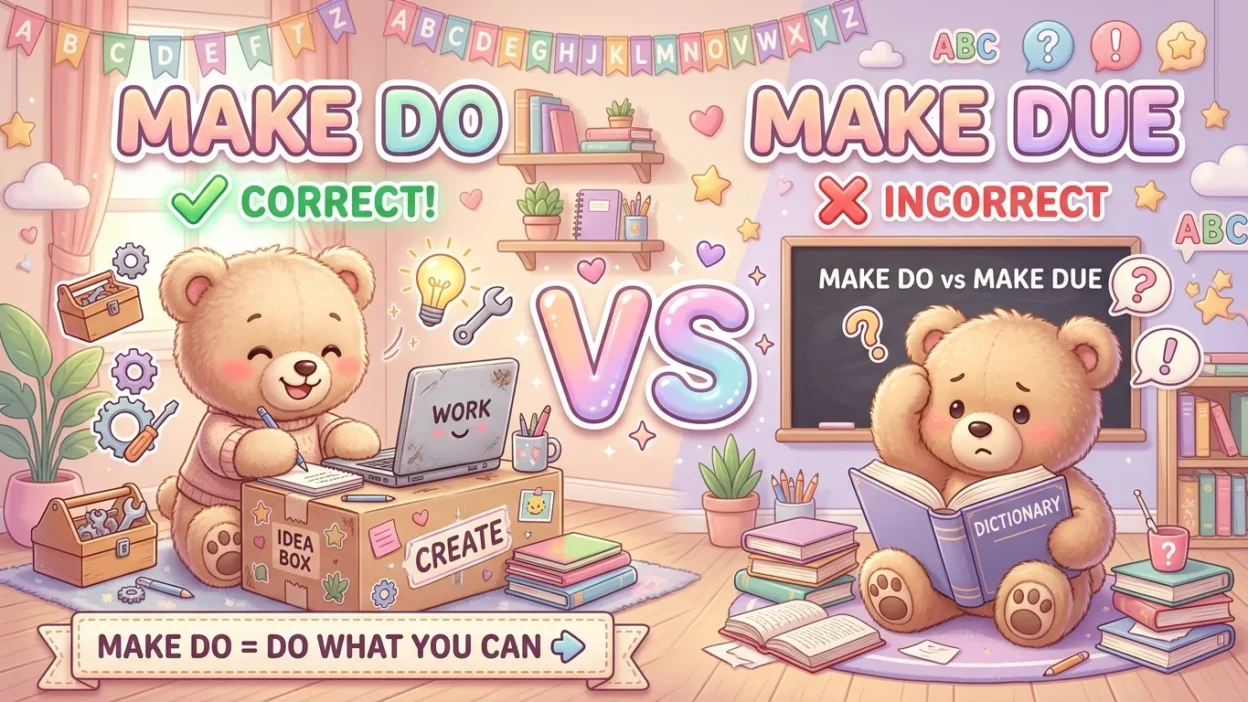
Have you ever wondered whether make do or make due is the correct expression? You’re not alone. These phrases sound almost identical, but only one is the standard expression when you mean managing with what you have. Make do means to accept or use what is available, even when it is not ideal. Make due, although sometimes seen as a spelling mistake or mishearing, is not the standard expression for this meaning.
In this guide, you’ll learn the difference between make do vs make due, including their meanings, examples, common mistakes, grammar rules, and an easy memory trick. Once you understand why do is the correct word in the expression, you’ll be able to use it confidently.
Quick Answer
- Make do ✅ — The correct standard expression meaning to manage with what is available.
- Make due ❌ — Not the standard expression when you mean managing with limited resources.
Example:
- We don’t have enough chairs, so we’ll have to make do.
What Do Make Do and Make Due Mean?
What Does Make Do Mean?
Make do is an established English expression meaning to manage with something that is available, even though it may not be ideal.
It often suggests that you have limited choices but will find a way to continue.
Examples:
- We don’t have a table, so we’ll make do with these boxes.
- I forgot my charger, so I’ll make do with my old one.
- There aren’t enough chairs, but we can make do.
- She had to make do with what she had.
The expression often communicates adaptability, resourcefulness, and acceptance of an imperfect situation.
What Does Make Due Mean?
Make due is generally considered a mistake when someone intends to write the expression make do.
For example:
- ❌ We’ll have to make due with what we have.
- ✅ We’ll have to make do with what we have.
The confusion probably occurs because due is a familiar English word and sounds almost identical to do in this phrase.
However, due has its own meanings and does not normally belong in the idiom make do.
Make Do vs Make Due Comparison Table
| Feature | Make Do | Make Due |
|---|---|---|
| Standard Expression | ✅ Yes | ❌ No |
| Meaning | Manage with what is available | Not the standard idiom |
| Common Use | Limited resources or imperfect conditions | Usually a spelling mistake |
| Example | We can make do with this. | ❌ We can make due with this. |
| Memory Clue | Do what you can | Not the standard phrase |
Why Are Make Do and Make Due Confused?
The main reason is pronunciation.
In many varieties of English, do and due can sound very similar or even identical in certain contexts.
When people hear:
- make do
they may assume the expression is:
- make due
However, spelling should follow the established idiom.
The correct phrase is:
make do
Think of it as doing what you can with what you have.
Examples of Make Do in Sentences
- We forgot the plates, so we’ll make do with bowls.
- There wasn’t enough money, so they had to make do.
- I lost my usual pen, so I’ll make do with this one.
- We don’t have a spare room, but we’ll make do.
- She had to make do with an old computer.
- The hotel was full, so we made do with a smaller room.
- Until the new equipment arrives, we’ll make do with the old equipment.
Examples of Make Due in Sentences
When make due is intended to mean manage with what you have, it is incorrect.
Incorrect:
- ❌ We need to make due with the supplies we have.
Correct:
- ✅ We need to make do with the supplies we have.
Incorrect:
- ❌ They had to make due without a car.
Correct:
- ✅ They had to make do without a car.
Common Mistakes People Make
The most common mistake is writing make due because due sounds similar to do.
Incorrect:
- ❌ We’ll have to make due until the repairs are finished.
Correct:
- ✅ We’ll have to make do until the repairs are finished.
Another common mistake is assuming that make due is simply an alternative spelling.
It isn’t. In standard English, the established expression is make do.
Simple Memory Trick
💡 Memory Trick
Spelling Box
Remember:
MAKE DO = DO WHAT YOU CAN
If you have limited resources, you make do with what you have.
Think:
“I don’t have everything I need, but I’ll DO what I can.”
Rule: MAKE DO is the standard expression.
What Does “Make Do With” Mean?
The phrase make do with means to manage using something that may not be ideal because it is what you have available.
Examples:
- We’ll make do with the old equipment.
- I forgot my bag, so I’ll make do with this one.
- They had to make do with a small kitchen.
- We can make do with what we have.
The structure is:
make do with + available thing
For example:
We don’t have enough chairs, so we’ll make do with the benches.
What Does “Make Do Without” Mean?
Make do without means to manage even though you don’t have something you normally need or want.
Examples:
- We’ll have to make do without electricity.
- She learned to make do without a car.
- We can make do without the extra equipment.
- They had to make do without their usual supplies.
This expression highlights adaptability in a difficult or limited situation.
Make Do in Everyday Life
Make do is commonly used when people have to work with limited resources.
For example:
- You forgot your umbrella, so you make do with a jacket.
- Your laptop charger breaks, so you make do with a backup.
- You don’t have enough ingredients, so you make do with what is available.
The phrase often suggests being practical rather than waiting for perfect conditions.
Make Do in Business
Businesses can also make do when resources are limited.
Examples:
- The company had to make do with a smaller budget.
- Until the new software arrives, we’ll make do with the current system.
- The team had to make do without additional staff.
Here, make do emphasizes finding practical solutions despite limitations.
Make Do in School
Students may also need to make do when they don’t have everything they want.
Examples:
- I forgot my notebook, so I’ll make do with loose paper.
- We didn’t have enough materials, so we had to make do.
- The students made do with the supplies available.
Make Do vs Make Due in Formal Writing
In formal writing, always use make do when you mean managing with available resources.
For example:
- ❌ We will have to make due with the current budget.
- ✅ We will have to make do with the current budget.
Because make due is not the standard form of the idiom, using it in professional or academic writing can look like a spelling or vocabulary error.
Is “Due” Ever Correct?
Yes. Due is a perfectly valid English word, but it has different meanings.
For example:
- The payment is due tomorrow.
- The train is due at noon.
- The delay was due to bad weather.
- She received the respect due to her position.
These uses have nothing to do with the idiom make do.
Therefore:
- make do = manage with what you have.
- due = owed, expected, scheduled, or caused by something, depending on context.
Make Do vs Make Due: Past Tense
The expression make do can change according to tense.
Present:
- We make do with what we have.
Past:
- We made do with what we had.
Future:
- We’ll make do until the replacement arrives.
Notice that the past form is made do, not made due.
Examples:
- ✅ They made do without electricity.
- ❌ They made due without electricity.
American vs British English
Make do is the standard expression in both American and British English.
Examples:
- American English: We’ll make do with what we have.
- British English: We’ll make do with what we have.
There is no major regional spelling difference here.
Make due may appear in informal writing as a mistaken form, but it is not the standard idiom in either variety.
When Should You Use Make Do?
Use make do when you mean:
- Manage with what you have.
- Use an imperfect substitute.
- Continue despite limited resources.
- Adapt to an inconvenient situation.
- Work with something less than ideal.
Examples:
- We’ll make do.
- We’ll make do with this.
- We’ll make do without it.
- They made do with the available supplies.
When Should You Use Make Due?
When you mean manage with what you have, you should not use make due.
Instead, write:
- ✅ make do
If you see make due in this context, it is usually a spelling mistake.
Related Words and LSI Keywords
- make do meaning
- make due meaning
- make do vs make due
- make do definition
- make due definition
- make do with
- make do without
- made do
- manage with what you have
- limited resources
- make the best of
- adapt
- resourceful
- make do idiom
- commonly confused words
- homophones
- English grammar
- English spelling
- correct English usage
- common spelling mistakes
Tips for Remembering the Difference
- Make do is the correct standard expression.
- Make do means manage with what you have.
- Make due is generally incorrect when used with this meaning.
- Think “DO what you can.”
- Use make do with for an imperfect substitute.
- Use make do without when something is unavailable.
- The past tense is made do, not made due.
Frequently Asked Questions
Is it make do or make due?
The standard expression is make do. It means to manage with what is available, even when it isn’t ideal.
Is make due ever correct?
Make due is not the standard expression when you mean “manage with what you have.” In that context, use make do.
What does make do mean?
Make do means to manage with whatever is available, especially when you don’t have an ideal option.
What does make do with mean?
Make do with means to use something available as a substitute when a better option isn’t available.
Example: We’ll make do with the old equipment.
What does make do without mean?
Make do without means to manage despite not having something you normally need or want.
Example: We’ll make do without a car for now.
Is “made do” correct?
Yes. Made do is the past-tense form of make do.
Example: We made do with what we had.
Why do people say make due?
The confusion likely comes from the similar pronunciation of do and due in many varieties of English. However, the established idiom is make do.
What is an easy way to remember make do vs make due?
Remember MAKE DO = DO WHAT YOU CAN. If you’re managing with limited resources, use make do.
Summary
The difference between make do vs make due is straightforward. Make do is the correct standard English expression meaning to manage with what is available, especially when the available option is less than ideal. You can use it with with or without, as in “make do with what you have” or “make do without a car.”
Make due is not the standard form of this idiom. The confusion usually comes from the similar sounds of do and due. Remember the simple idea “DO what you can”, and you’ll know that the correct expression is make do.

Cedric Halewood is known for his intricate historical narratives.
His work reflects a deep fascination with lost civilizations.
He lives near the coast, where he finds inspiration in the sea.