Have you ever wondered whether past away or passed away is the correct phrase? You’re not alone. These expressions can sound similar when spoken, but they have completely different grammatical roles. When you want to say that someone has died in a gentle or respectful way, passed away is the correct phrase.
In this guide, you’ll learn the difference between past away vs passed away, their meanings, examples, common mistakes, and a simple memory trick that makes the correct phrase easy to remember.
Quick Answer
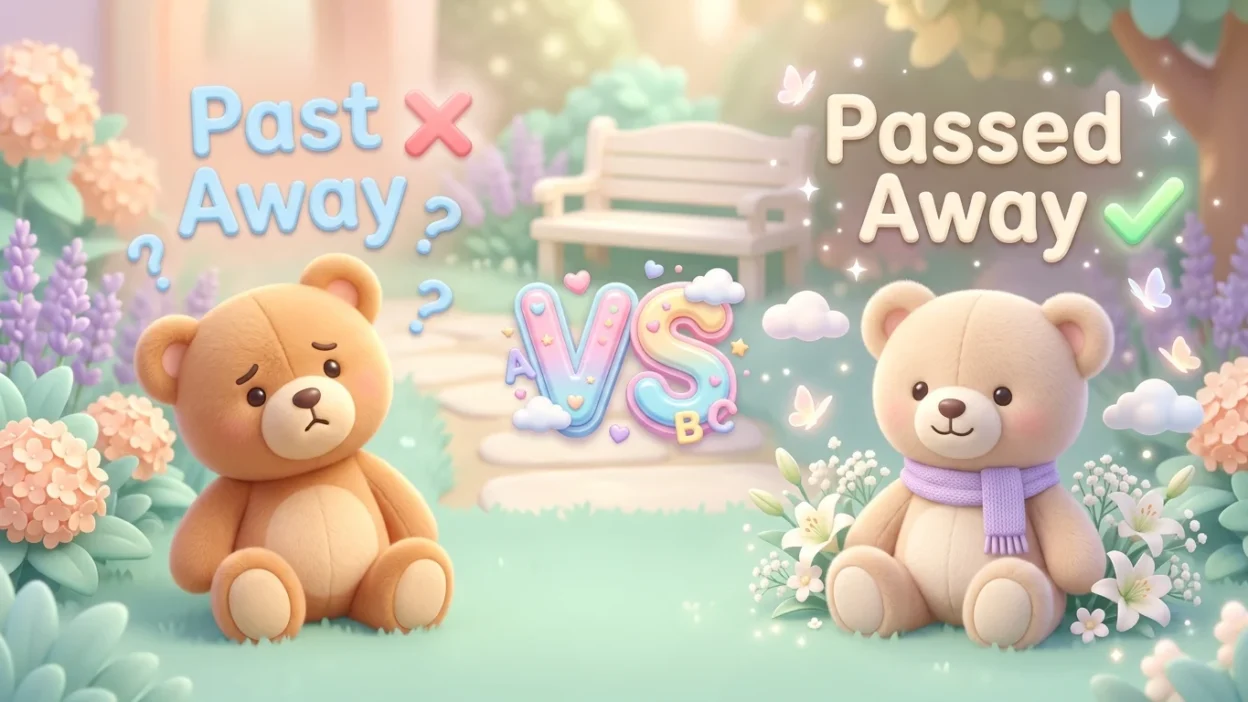
- Passed away ✅ — Correct.
- Past away ❌ — Incorrect when referring to someone’s death.
Passed away is a polite and softer expression for died.
Example:
- Her grandfather passed away peacefully.
What Do Past Away and Passed Away Mean?
What Is Passed Away?
Passed away is a phrasal verb that is commonly used as a respectful or gentle way to say that someone died.
The verb passed is the past tense of pass.
Examples:
- My uncle passed away last year.
- Her grandmother passed away peacefully.
- His father passed away after a long illness.
- We were saddened to hear that she passed away.
The phrase often appears in condolences, obituaries, announcements, and sensitive conversations about death.
What Is Past Away?
Past away is incorrect when you mean that someone died.
The word past is usually a noun, adjective, preposition, or adverb. It is not the past-tense verb needed in this expression.
Incorrect:
- ❌ His grandfather past away last year.
Correct:
- ✅ His grandfather passed away last year.
Past Away vs Passed Away Comparison Table
| Feature | Past Away | Passed Away |
|---|---|---|
| Correct Expression | ❌ No | ✅ Yes |
| Verb | Past | Passed |
| Meaning in This Context | Incorrect | Died |
| Appropriate for Sensitive Situations | No | Yes |
| Standard English | No | Yes |
Why Is “Passed Away” Correct?
The phrase comes from the verb pass.
The main forms are:
Pass → Passed → Passed
Therefore:
Pass away → Passed away
For example:
- Present: He may pass away someday.
- Past: He passed away yesterday.
- Present perfect: He has passed away.
The word past does not function as the past-tense form of pass.
Therefore:
- Passed away ✅ — Correct.
- Past away ❌ — Incorrect.
Examples of Passed Away in Sentences
- Her grandmother passed away peacefully.
- My neighbor passed away last month.
- His father passed away several years ago.
- We were sorry to hear that your uncle passed away.
- The famous writer passed away at the age of 82.
- She passed away peacefully surrounded by her family.
- Many people attended the funeral after he passed away.
Common Mistakes People Make
This mistake often happens because past and passed sound very similar.
Common errors include:
- Writing past away instead of passed away.
- Confusing the noun/adjective past with the verb passed.
- Forgetting that passed is the past tense of pass.
- Using past because the phrase refers to something that happened in the past.
Incorrect:
- ❌ We were sad when she past away.
Correct:
- ✅ We were sad when she passed away.
Simple Memory Trick
💡 Memory Trick
Verb Forms Box
Remember:
PASS → PASSED → PASSED
Therefore:
PASS AWAY → PASSED AWAY
Rule: If you can replace the phrase with died, use passed away, not past away.
Past vs Passed: What’s the Difference?
Understanding past and passed makes this mistake much easier to avoid.
Past
Past can describe something that happened before now.
Examples:
- We walked past the house.
- The past year was difficult.
- She thinks about her past.
Passed
Passed is the past tense and past participle of pass.
Examples:
- He passed the exam.
- She passed the building.
- Time passed quickly.
- His grandfather passed away.
A simple way to remember it is:
Past = time or position
Passed = action
When Should You Use Passed Away?
Use passed away when you want to refer to someone’s death in a gentle, respectful, or less direct way.
It is commonly used in:
- Condolences.
- Obituaries.
- Funeral announcements.
- Sympathy messages.
- Personal conversations.
- Memorial writing.
Example:
- We are deeply saddened to announce that our beloved teacher passed away peacefully.
When Should You Use Past Away?
Don’t use past away when referring to someone’s death.
The correct expression is:
Passed away ✅
American vs British English
Passed away is used in both American and British English.
There is no spelling difference:
- Passed away ✅
- Past away ❌
Both varieties commonly use passed away as a respectful euphemism for died.
Related Words and LSI Keywords
- passed away meaning
- passed away definition
- past away meaning
- died
- death
- deceased
- passed on
- lost a loved one
- condolences
- sympathy
- obituary
- funeral
- memorial
- respectful expression
- English grammar
- commonly confused words
- spelling mistakes
- correct English usage
Tips for Remembering the Difference
- Remember pass → passed.
- Passed away means died.
- Past relates to an earlier time or position.
- If you’re describing an action, passed is usually the form you need.
- Never write past away when referring to someone’s death.
Frequently Asked Questions
Is past away correct?
No. Past away is incorrect when you mean that someone died.
Which is correct: past away or passed away?
Passed away is correct.
What does passed away mean?
Passed away is a respectful and gentle expression meaning that someone died.
Why do people say passed away instead of died?
Passed away is often considered softer and more respectful than the direct word died, especially in condolences and sensitive conversations.
Is passed away used in American and British English?
Yes. Passed away is commonly used in both American and British English.
Can passed away be used in formal writing?
Yes. It is frequently used in obituaries, memorial notices, sympathy messages, and other respectful contexts.
Summary
The difference between past away vs passed away is simple once you understand the difference between past and passed. Passed away is the correct phrase when you mean that someone died. Past away is an incorrect expression in this context.
Remember the verb pattern pass → passed → passed. Since passed away comes from the verb pass, the correct phrase contains passed. This small spelling difference can make your writing more accurate and respectful.